|
Don't Underestimate the Power of Suggestion
Author:
Stan Reents, PharmD
Original Posting:
02/04/2008 05:36 AM
Last Revision: 01/07/2019 06:00 AM
How many of you know what the "placebo effect" is?
The mind is very powerful, but it can be easily misled. It turns out that we are all affected by marketing and advertising a lot more than we think.
In this review, I'll summarize some examples that illustrate how easily perceptions can be influenced.
THE POWER OF SUGGESTION IN COLLEGE STUDENTS
Even very intelligent people can be fooled, as evidenced in this study of medical students from way back in 1959:
Researchers performed a variety of hoaxes on medical students to measure how stress affected heart rate and blood flow. In order to create a realistic stress response, the psychological scenarios were extreme and bizarre. These included:
- administering a grueling oral exam in the area of physiology and then severely criticizing the students with each response, whether or not it was correct
- convincing the students that, after inserting a needle into their arm (which they couldn't see), something had gone wrong and they were losing a large amount of blood
- dissecting open the stomach of a rabbit and then telling the student he had to taste the contents
In most of the trials, these medical students believed the stories and panicked, which was the whole point of the study in the first place: to examine the effects of the autonomic nervous system during stress. In one student, resting heart rate increased from 80 bpm to 140 bpm after he believed he was experiencing severe blood loss. (Blair DA, et al. 1959).
THE POWER OF SUGGESTION IN FOOD MARKETING
In a study from Stanford University, researchers had subjects rate the taste of food from McDonald's. In some cases, it was served in the original wrapper (thus, making it clear that the food was McDonald's), and, in other cases, the original wrapper was replaced with an unmarked wrapper.
In every case, the subjects rated the "McDonald's-wrapped" food as tasting better even though all of the food was from McDonald's. Even the McDonald's-wrapped carrots were rated as tasting better!
Now, here is the punch in the gut: all of the study subjects were.....pre-schoolers! Further, the preference of the McDonald's brand was higher in children from households that had more television sets and ate at McDonald's more often (Robinson T, et al. 2007).
This study shows how food-branding and marketing can begin to affect our psyche at a very early age.
But, perhaps you may be saying, "it's not relevant....those were children....I'm not that gullible." If so, think again:
One of the national TV networks recruited young professionals from New York City to participate in a taste-test of various vodkas. Before the test, each subject was asked what their favorite vodka was. Then, they were asked to sample several vodkas, including their personal favorite, without knowing the brands they were tasting. In several cases, the subjects rated their supposed "favorite" poorly during the test. Premium brands such as Belvedere and Grey Goose were not rated better than more economical brands such as Smirnoff.
THE POWER OF SUGGESTION IN CLINICAL RESEARCH
Even physicians are susceptible to marketing claims. Studies show that hospital use of a particular antibiotic can be influenced by pharmaceutical sales reps "detailing" physicians about that drug.
Here are several other examples of drug research:
• People were recruited to participate in an analysis of a drug used to promote and improve sleep. The subjects were told that some of them would receive the active drug and others would receive a placebo. (This is exactly how a placebo is used in scientific study. However, while it is customary to inform subjects that a placebo is being used, generally they are never told if they received the active drug or a placebo.)
At the end of the sleep study, the researcher asked his subjects about their sleep quality. Many subjects stated that they slept much better and were certain that they had received the active drug, even though they didn't know what they had been given. In fact, some subjects liked the "drug" so much, that they wanted to continue taking it.
Now, here's the catch: BOTH groups received a placebo. Not one subject received any active drug!
In another study, researchers wanted to see if knowing the cost of a drug could influence what subjects thought about its effectiveness:
• Subjects were told they were going to receive 2 different analgesics to compare their effectiveness. They were told that one drug cost $2.50/pill and the other cost $0.10/pill, even though both "drugs" were actually inactive placebos. The volunteers then received electrical shocks to the wrist in increasing intensity. At all voltages tested, the subjects rated the higher-priced drug as being a better analgesic (Waber RL, et al. 2008).
This illustrates how the power of suggestion can influence research results. This is called "the placebo effect." To avoid obtaining misleading results when doing research in humans, the use of a placebo (ie., a control group) is often necessary.
ATHLETES CAN ALSO BE FOOLED
So what does all this have to do with exercise, fitness, and/or sports nutrition, which, of course, are the topics we focus on here at AthleteInMe.com®?
It turns out that the placebo effect can fool athletes into thinking a supplement works when, in fact, it doesn't:
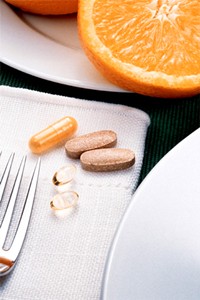
• Study #1: In 2006, researchers in the UK recruited well-trained cyclists for a study of the effects of caffeine on cycling performance. The cyclists were told to perform three 10-km time trials. Before each one, they were told they would receive either placebo, caffeine 4.5 mg/kg, or caffeine 9.0 mg/kg, in random order. (Caffeine and placebo were administered as capsules in this study.)
Performance improved as expected: performance after low-dose caffeine was better than performance after taking the placebo, and, performance after taking high-dose caffeine was better than both of the other trials (Beedie CJ, et al. 2006).
Now, here's the kicker: no caffeine was ever administered! During all 3 time-trials, the athletes received placebo.
What happened here was that the athletes performed better solely on the basis that they believed they would. In fact, the power of suggestion was so strong that all of the cyclists stated they experienced caffeine-related side effects (despite not receiving any caffeine)!
Another study, also from the UK, went like this:
• Study #2: Forty-two "team sport" athletes were recruited to perform a series of 30-meter sprints. After collecting baseline times, the athletes were given 200 mg of cornstarch in a gelatin capsule, but, they were told that it was an ergogenic substance and would likely improve their sprint times. Twenty minutes after taking the capsule, the athletes repeated the sprints. Performance was indeed better after the athletes were told they had received a performance-enhancing drug even though they ingested a cornstarch placebo (Beedie CJ, et al. 2007).
Here is another one, with an even more unique design (I just love this kind of research):
• Study #3: Researchers in Scotland recruited elite runners to complete a series of 1000-meter time trials. In this study, the effects of sodium bicarbonate and placebo were compared. (Sodium bicarbonate is known to provide ergogenic effects during high-intensity, short-duration physical effort.)
When the athletes believed that they had been given sodium bicarbonate (even though they had actually received placebo), their performance was improved. Conversely, when they were given sodium bicarbonate but were not told, their performance did not improve (McClung M, et al. 2007). Again, this shows that what you believe can influence your performance.
GUIDELINES TO CONSIDER WHEN EVALUATING SUPPLEMENTS
The point of this discussion is to get you to question what you read, hear, and think about supplements. In doing so, there are 2 major issues to always keep in mind:
Testimonials Are No Substitute For Evidence / Proof / Data

It is important to realize that, in the US, supplements do not undergo extensive and rigorous scientific evaluation for efficacy before they are placed into the marketplace.
Why? Because they don't have to. The 1994 DSHEA law allows manufacturers to market supplements (in the US) without proof of efficacy as long as they do not make specific health or disease treatment claims.
You should never believe that a supplement works just because (a) you think it does or (b) someone tells you it does. Even if you take it for a week or 2, and, even if you are absolutely certain that it is making a difference, it could simply be the placebo effect that you are perceiving....just like the various studies I described above. You should be even more skeptical if the person trying to convince you to buy a supplement receives a commission on sales of that product.
Research Conducted Without a Placebo Control Group May Not Be Valid
Even when research on the efficacy of a supplement has been conducted, look to see if a "placebo control group" was used. If it wasn't, then it will be very difficult to prove that whatever results were observed were truly due to the supplement being studied.
SUMMARY
In the US, supplements do not undergo extensive and rigorous scientific evaluation for efficacy before they are placed into the marketplace. Even when research has been conducted on the performance-enhancing effects of supplements, that research may not be valid if a placebo-control group was not used. The observed results may be due to the power of suggestion.
QUESTIONS
Q: What is a "placebo"?
ANSWER: In very simplistic terms, a "placebo" is simply a "fake" drug....ie., a sugar pill. In scientific study, it is very important to plan for the possibility that the placebo effect can influence the results. The reason for this is because when humans expect a response will occur, a physiologic (ie., measurable) response can actually occur...even when they receive the sugar pill. Human beings are known to change their behavior when they know they are being studied; this is called the "Hawthorne Effect." The use of a placebo helps to make research findings more reliable.
FOR MORE INFORMATION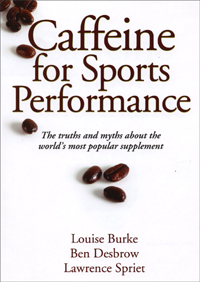
Caffeine can improve sports performance. But, there are a lot of misconceptions about caffeine, too. Find out the truth in "Caffeine For Sports Performance," an excellent resource on this topic.
Readers may also be interested in these reviews:
EXPERT HEALTH and FITNESS COACHING
Stan Reents, PharmD, is available to speak on this and many other exercise-related topics. (Here is a downloadable recording of one of his Health Talks.) He also provides a one-on-one Health Coaching Service. Contact him through the Contact Us page.
REFERENCES
Beedie CJ, Stuart EM, Coleman DA, et al. Placebo effects of caffeine on cycling performance. Med Sci Sports Exerc 2006;38:2159-2164. Abstract
Beedie CJ, Coleman DA, Foad AJ. Positive and negative placebo effects resulting from the deceptive administration of an ergogenic aid. Int J Sport Nutr Exerc Metab 2007;17:259-269. Abstract
Blair DA, Gover WE, Greenfield AD, et al. Excitation of cholinergic vasodilator nerves to human skeletal muscles during emotional stress. J Physiol 1959;148:633-647. Abstract
McClung M, Collins D. "Because I know it will!": placebo effects of an ergogenic aid on athletic performance. J Sport Exerc Psychol 2007;29:382-394. Abstract
Robinson TN, Borzekowski DL, Matheson DM, et al. Effects of fast food branding on young children's taste preferences. Arch Ped Adolesc Med 2007;161:792-797. Abstract
Trojian TH, Beedie CJ. Placebo effect and athletes. Curr Sports Med Rep 2008;7:214-217. Abstract
Waber RL, Shiv B, Carmon Z, et al. Commercial features of placebo and therapeutic efficacy. JAMA 2008;299:1016-1017. (no abstract)
ABOUT THE AUTHOR

Stan Reents, PharmD, is a former healthcare professional. He is a member of the American College of Lifestyle Medicine (ACLM) and a member of the American College of Sports Medicine (ACSM). In the past, he has been certified as a Health Fitness Specialist by ACSM, as a Certified Health Coach by ACE, as a Personal Trainer by ACE, and as a tennis coach by USTA. He is the author of Sport and Exercise Pharmacology (published by Human Kinetics) and has written for Runner's World magazine, Senior Softball USA, Training and Conditioning and other fitness publications.
Browse By Topic:
dietary supplements, exercise information, exercise resources, nutrition recommendations, performance-enhancing substances
Copyright ©2026 AthleteInMe,
LLC. All rights reserved.
|