|
Resistance-Training Principles Part 2: Advanced Concepts
Author:
Stan Reents, PharmD
Original Posting:
05/06/2007 11:07 AM
Last Revision: 12/10/2018 05:56 AM
In Part 1, I reviewed the basic principles regarding how muscles respond to resistance-training. Here in Part 2, I will discuss more advanced principles, specifically, number of sets/exercise, number of reps/set, and a concept known as "periodization."
Many body builders and personal trainers don't understand the difference between muscular strength and muscular endurance, and how resistance-training programs should be designed to reach to those 2 unique goals.
For serious athletes, Baechle and Groves (1999) recommend the following formulas:
|
For
Maximum
Strength
and
Power |
To
Increase
Muscle
Size |
To
Increase
Muscle
Endurance |
| • Percent of 1-RM: |
80 - 100% |
70 - 80% |
< 70% |
| • No. of Reps: |
1 - 8 reps |
8 - 12 reps |
12 - 20 reps |
| • No. of Sets: |
1 - 5 sets |
1 - 6 sets |
1 - 3 sets |
• Rest between
sets: |
2 - 5 min |
1 - 2 min |
20 - 30 secs |
In the Maximum Strength & Power program described above, a longer rest between sets is necessary since intensity is so high.
Regarding muscle size, keep in mind that age, genetics, and sex each help to determine how large your muscles get in response to resistance exercise. For example, women never get as large as men. And resistance-training in young adolescents does not seem to produce much increase in muscle size even though strength does improve.
The concept of using less weight while simultaneously increasing the number of reps is especially important when conditioning the long, thin muscles of the back. These muscles are responsible for holding the spine in alignment when you are standing. They contract and relax thousands of times per day. These muscles are designed for endurance, not strength. Thus, the formula for improving muscular endurance involves decreasing the amount of weight lifted while increasing the number of reps.....to as many as 15-30 reps per set. This concept is explained in detail in the review: Exercise and Back Pain.
PERIODIZATION
Now you know the fundamentals of designing a resistance-training regimen. But, if you do the same exercise at the same weight and perform the same number of repetitions every time you work out, you will eventually reach a strength plateau. This is resolved by something called "periodization". Integrating periodization into athletic training takes advantage of Selye's concept of stress adaptation. As a muscle gets stronger, the amount of weight is increased. Another way to describe it is "planned variation." Very simple, right?
Well, no it isn't. Just how you design the periodization program is a subject of active research. There are several different strategies:
• Linear Periodization: Linear periodization divides a resistance-training program into distinct periods, or cycles: macrocycles (9-12 months), mesocycles (3-4 months), or microcycles (1-4 weeks). In this program, the weight-lifting formula remains fairly constant within each cycle. When the new cycle begins, the intensity (amount of resistance) is increased while the volume (number of reps) is decreased.
• Undulating Periodization: With an undulating periodization program, the intensity and volume change much more frequently, even as often as every day of training.
RESEARCH ON PERIODIZATION IN STRENGTH TRAINING
Most of the research on this topic has compared resistance programs that utilize periodization with programs that do not. Reports show that periodization is superior to no periodization. Note that we are talking about muscular strength here, and not muscular size or endurance.
Linear vs. Undulating Periodization:
Some research has compared the 2 different types of periodization head-to-head. One study reported no difference in strength gains between an undulating program (volume and intensity were modified every 2 weeks) vs. a linear program (volume and intensity were altered every 3-4 weeks) (Baker D, et al. 1994).
Believing that the above study was flawed due to not enough differences between the weight-training programs, investigators from Arizona State performed their own comparison. Twenty weight-lifting college age males were studied. Both groups weight-trained 3 times per week for 3 months. In the linear group, the intensity and volume were constant for 4 weeks before being changed. In the undulating periodization group, a weekly cycle was followed consisting of:
- day 1: three sets of 8-RM
- day 2: three sets of 6-RM
- day 3: three sets of 4-RM
At the beginning of each new week, they repeated this formula.
After 12 weeks, the subjects in the daily undulating periodization (DUP) group developed significantly greater strength gains than the linear periodization (LP) group. But this came at a price. Near the end of the 12-wk study, the subjects in the DUP group complained of extended muscle fatigue and soreness (Rhea MR, et al. 2002).
Periodization is a concept employed in training programs of all types of elite athletes, not just weight-lifters:
• Tennis Players: A 9-month study in female collegiate tennis players showed that daily undulating periodization produced superior strength gains compared to the nonperiodized program (Kraemer WJ, et al. 2000).
• Track and Field Athletes: A program of undulating periodization produced greater strength gains in athletes competing in throwing events when compared to the nonperiodized program. Strength was assessed using both bench press and squat exercises (Ivonov L, et al. 1980).
GUIDELINES FOR ADVANCED RESISTANCE-TRAINING ATHLETES:
• Doing multiple sets has been shown to produce greater strength gains than doing a single set.
• Introducing variety (periodization) in your routine will not only alleviate boredom, but will also produce greater strength gains.
• Don't forget periods of rest from time to time to let your muscles recover and build strength. Significant gains can be achieved in both strength and muscular endurance with just 2 exercise sessions per week.
FOR MORE INFORMATION
Kraemer and Ratamess (2004) published a nice review of specific resistance training programs for developing strength, power, muscle size, or muscle endurance. (see References below)
A weight-training book we thought was excellent is Building Strength & Stamina, 2nd ed. by Wayne Westcott, PhD, CSCS.
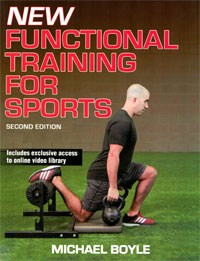
As your resistance-training program evolves, consider this book: New Functional Training for Sports, 2nd ed. Trainer Mike Boyle presents resistance exercises that I haven't seen in other books.
To learn more about the benefits of resistance-training on health and various disease states, see:
EXPERT HEALTH and FITNESS COACHING
Stan Reents, PharmD, is available to speak on a variety of exercise-related topics. (Here is a downloadable recording of one of his Health Talks.) He also provides a one-on-one Health Coaching Service. Contact him through the Contact Us page.
REFERENCES
Baker D, Wilson G, Carlyon R. Periodization: the effect on strength of manipulating volume and intensity. J Strength Cond Res 1994;8:235-242. (no abstract)
Ivonov L Krugily V, Zinchenko V. Individualized strength development for throwers. Sov Sports Rev 1980;14:138-139. (no abstract)
Kraemer WJ, Ratamess N, Fry AC, et al. Influence of resistance training volume and periodization on physiological and performance adaptations in collegiate women tennis players. Am J Sports Med 2000;28:626-633. Abstract
Kraemer WJ, Ratamess NA. Fundamentals of resistance training: progression and exercise prescription. Med Sci Sports Exerc 2004;36:674-688. Abstract
Rhea MR, Ball SD, Phillips WT, et al. A comparison of linear and daily undulating periodized programs with equated volume and intensity for strength. J Strength Cond Res 2002;16:250-255. Abstract
ABOUT THE AUTHOR

Stan Reents, PharmD, is a former healthcare professional. He is a member of the American College of Lifestyle Medicine (ACLM) and a member of the American College of Sports Medicine (ACSM). In the past, he has been certified as a Health Fitness Specialist by ACSM, as a Certified Health Coach by ACE, as a Personal Trainer by ACE, and as a tennis coach by USTA. He is the author of Sport and Exercise Pharmacology (published by Human Kinetics) and has written for Runner's World magazine, Senior Softball USA, Training and Conditioning and other fitness publications.
Browse By Topic:
exercise guidelines, exercise recommendations, plyometrics, resistance training, strength exercise
Copyright ©2026 AthleteInMe,
LLC. All rights reserved.
|