|
Energy Drinks
Author:
Stan Reents, PharmD
Original Posting:
05/06/2007 06:40 AM
Last Revision: 01/07/2019 05:29 AM
"ENERGY" DRINK or "SPORTS" DRINK?
What's the difference between "energy" drinks and "sports" drinks? Aren't these just different names for the same category of beverage? 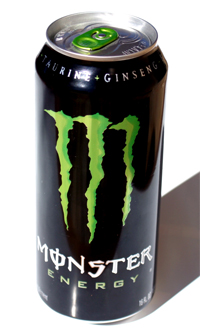
No. Energy drinks and sports drinks are different and should not be confused, though, admittedly, there is quite a bit of overlap. "Sports" drinks are intended to improve physical performance by rehydrating the body and supplying it with the nutrients it needs, whereas, energy drinks are loaded in sugar and caffeine and, despite their name, are a poor choice for energy for most athletes. Sports drinks were launched in the late 1960's when Gatorade® was first released. Energy drinks evolved more recently, with many regarding Red Bull® as the prototype for this group. It was first marketed in the US starting in 1997.
In my mind, there are 3 main ways to distinguish between energy drinks and true sports drinks:
- Caffeine content
- Carbohydrate content
- Other ingredients
1) CAFFEINE CONTENT
Generally, energy drinks contain caffeine while sports drinks don't. But, it's not always easy to determine the caffeine content of energy drinks.
In the US, soft drinks are classified as a "food" and, as such, fall under the regulation of the FDA. The FDA limits the amount of caffeine in soft drinks to no more than 71 mg per 12 fl. oz.
However, the DSHEA law, passed in 1994, allows manufacturers to categorize their energy drinks as "dietary supplements." This excludes them from traditional FDA food regulations and, thus, opens the door for selling formulations that have whopping amounts of caffeine.
One reason why determining the amount of caffeine in energy drinks can be difficult is due to the FDA rules governing nutrition labels. Caffeine is not a "nutrient" per se, so, while the presence of caffeine might be listed, the specific amount is not required on the label.....unless it is added artificially. But, that ruling only applies to "foods," not dietary supplements. Confused? See the following table:
| EXAMPLE |
CLASSIFICATION |
SOURCE OF
CAFFEINE |
CAFFEINE AMT.
REQUIRED
ON LABEL? |
coffee beans
or ground coffee,
chocolate,
tea bags |
FOOD |
occurs naturally |
NO |
| soda pop |
FOOD |
caffeine
is added
artificially |
yes |
| energy drinks |
DIETARY
SUPPLEMENT |
doesn't matter |
NO |
In addition, note that green tea extract, guarana, kola nut, and yerba mate extract are herbal sources of caffeine found in some brands of energy drinks. But, even if the label states "guarana 100 mg," you still do not know how much caffeine that represents (ie., 100 mg of guarana does not yield 100 mg of caffeine). Reference texts list the caffeine content of guarana from 3% to more than 5%. The amount of caffeine in kola nut and yerba mate extract (Athayde ML, et al. 2000) is even more difficult to determine.
| HERB |
CAFFEINE CONTENT |
1000 mg OF THE HERB
CONTAINS: |
| • Coffee Beans |
1-2% |
10-20 mg caffeine |
| • Green Tea Extract |
1-4% |
10-40 mg caffeine |
| • Guarana |
3-6% |
30-60 mg caffeine |
| • Kola nut |
(unclear) |
(unclear) |
| • Yerba Mate Extract |
(highly
variable) |
(unclear) |
However, the details in the table above are useless if the manufacturer doesn't clarify how much of each herb is in the beverage. Thus, consumers really have no idea how much total caffeine they are getting. That's the case with some of the most popular energy drinks:
• Monster® does not clarify the amount of caffeine on either the can's label or their web site. Authors of other reviews of energy drinks have also been unable to provide this detail (Higgins JP, et al. 2010). This is unfortunate because Monster® is the #1 selling energy drink in the US (USA Today, Dec. 1, 2011). Instead, caffeine and/or caffeine-containing herbs are grouped with several other ingredients and reported collectively as "Energy Blend." Then, the total amount of the group is listed (ie., "2500 mg").
• Redline Xtreme® lists "caffeine 158 mg" per 4-fl. oz. But, this beverage also contains herbal sources of caffeine: green tea extract and yerba mate extract. However, the specific amounts of each herb are not provided, so it is unclear what the exact amount of caffeine is in this beverage. This is important because if the entire bottle (8-fl oz.) was consumed, the consumer would ingest at least 316 mg caffeine!
• 5-hour Energy® employs the same strategy as Monster®: 7 different ingredients are grouped together and listed as: "Energy Blend 1870 mg." Caffeine is one of the ingredients. Thus, it is impossible to determine how much caffeine is contained in one serving.
Unfortunately, even when the amounts are listed on the label, consumers may not be getting accurate information. A recent evaluation by Consumer Reports ("12 Supplements You Should Avoid.")revealed that 5 out of 27 brands of energy drinks contained at least 20% more caffeine than stated.
Consumer Reports found the following energy drinks contain more than 200 mg PER SERVING:
| ENERGY DRINK |
CAFFEINE
PER SERVING |
| • 5-hour Energy, Extra Strength |
242 mg |
| • Rockstar Energy Shot |
229 mg |
| • NOS High Performance |
224 mg |
| • Monster X-presso |
221 mg |
| • 5-hour Energy, Regular Strength |
215 mg |
| • Celcius Ultimate Fitness Partner |
212 mg |
| • Full Throttle |
210 mg |
(It is generally recommended that otherwise healthy adults consume no more than 400 mg caffeine per day, pregnant women no more than 200 mg/day, and children no more than 85 mg/day.)
2) CARBOHYDRATE CONTENT
Another distinction between energy drinks and sports drinks is the amount of carbs. In energy drinks, the carbohydrate concentration is typically much higher than in sports drinks. Extensive research over the past 20 years shows that the optimum carbohydrate concentration of a sports drink is 5-6% (see Sports Drinks and Recovery Drinks). For example, the carbohydrate concentration of Gatorade® original is 5.8% and Cytomax® is 5.4%. When the carbohydrate concentration in a beverage is greater than 7-8%, the rate of gastric emptying slows (Murray R, et al. 1999) (Shi X, et al. 2004). This can cause stomach cramps (or worse) during exercise or competition.
The carbohydrate concentration of most energy drinks ranges 11-15%. And, many are carbonated. Both of these issues mean these beverages should be avoided during competition due to the risk of GI problems (stomach cramps, side stitch, etc.). Thus, energy drinks are not much different than soft drinks such as Coca-Cola® or Mountain Dew®, except for the fact that energy drinks often contain other substances such as herbs, vitamins.....and a lot more caffeine!
Regardless of the effects on the GI tract, here is another way to look at energy drinks: the typical can contains about 13 teaspoons of sugar. That's equivalent to about a 1/4 cup!
3) OTHER INGREDIENTS
The third way to differentiate energy drinks from sports drinks is to look for additional ingredients.
Sports drinks are generally a simple combination of carbs (glucose, fructose), electrolytes (sodium, potassium), and/or protein while energy drinks often have a variety of other ingredients that you don't need during athletic events. These might include vitamins, herbs, or other substances. These additional ingredients could sabotage your athletic performance. However, there are potentially more serious concerns: some of them may increase the toxicity of excessive amounts of caffeine (see discussion below).
With hundreds of energy drinks on the market (Higgins JP, et al. 2010), it is impossible to summarize and review the ingredients of all of them. Some of the more common ingredients include:
• L-Carnitine: L-carnitine is synthesized from the amino acids lysine and methionine. L-carnitine is involved in energy production inside the mitochondria of cells. There is some evidence that L-carnitine does possess performance-enhancing properties, but the evidence is scant (Higgins JP, et al. 2010).
• Glucuronolactone: Glucuronolactone is a naturally-occurring chemical that is found in connective tissue. Even though it is included in many brands of energy drinks, very little research has been done on it (Higgins JP, et al. 2010).
• Guarana: As mentioned above, guarana is a popular herbal source of caffeine.
• Taurine: Taurine is an amino acid. While it possesses some intriguing properties, it appears that the amount of taurine found in energy drinks is too low to generate these effects (Higgins JP, et al. 2010).
CONFUSING PRODUCT NAMES
Athletes should review the ingredients label for energy drinks carefully. If one only considers the product's name or tag-line, it's easy to get confused. For example, Gatorade® calls its Performance Series sports beverage an "energy drink" while the tag-line on Powerade's® label is currently "liquid hydration + energy drink". These beverages contain no caffeine, and the carbohydrate concentration is acceptable, so these are best classified as sports drinks, not energy drinks.
Also confusing is Arizona Beverage's "Low Carb Extreme Energy Shot." Even though it doesn't violate the rule "carbohydrate concentration in sports drinks should be no higher than 8%," it is clearly an energy drink, since it contains a ton of caffeine. In fact, the carbohydrate concentration is too low (eg., 1.25%) for that to be a significant source of energy. Thus, most of the "energy" in this drink comes from caffeine.
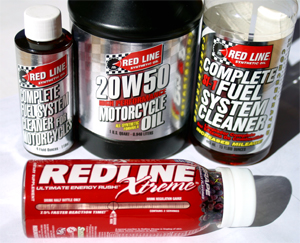
"Redline" and "Red Bull" have similar names. And, both are sold in 8-oz. containers. However, 8-oz. of Redline Xtreme contains 4 times the caffeine as the same amount of Red Bull (one bottle of Redline Xtreme® contains at least 316 mg caffeine!)
It is worth pointing out that "Red Line" is also the name of a company that produces automotive and motorcycle products.
SERVING SIZE
"Serving Size" is another detail to review carefully. Many consumers might assume that a single container is equivalent to a single "serving." Not so! Red Bull® is sold in small cans, whereas other brands (eg., Monster®, RockStar®, and others) are sold in 16-oz. cans and some are even larger than that. In addition, the label on the can may list the ingredients as "per 8 fl. oz." or "per 16 fl. oz." but the total volume of that can may be different. Thus, it is easy to get confused; you might be getting way more caffeine per can than you realize.
A product that could easily confuse consumers with regards to the recommended serving size is "Speed Shot" by American Body Building: the label states "125 mg caffeine per serving." The serving size is "1/2 bottle" however, the bottle only contains a total of 8.5 ml!! That's a little more than a teaspoon! If you consumed the whole bottle -- which would be very easy to do -- you would get 250 mg caffeine! In addition, this product also contains synephrine, a drug with amphetamine-like properties.
The table below shows that there is no relationship between the size of the container and the number of servings it contains:
| PRODUCT |
SIZE OF
CONTAINER |
NO. OF SERVINGS
PER CONTAINER |
| • Speed Shot |
0.3 fl. oz. |
2 |
| • 5-Hour Energy |
1.9 fl. oz. |
1-2 |
| • Red Bull |
8 fl. oz. |
1 |
| • Redline X-treme |
8 fl. oz. |
2 |
| • Monster |
16 fl. oz. |
2 |
| • RockStar |
16 fl. oz. |
2 |
| • SoBe No Fear |
16 fl. oz. |
2 |
| • Speed Stack |
18 fl. oz. |
1 |
| • RockStar |
24 fl. oz. |
3 |
Thus, at one extreme, you have a product that provides 2 servings in less than a half-ounce ("Speed Shot") and another product that provides only 1 serving in 18-fl.oz. ("Speed Stack").......quite a wide range indeed!
Carbohydrate and Caffeine Amounts in Energy Drinks:
Space does not permit listing them all, but several energy drinks and soft drinks are summarized below:
NOTE: Keep in mind that the amounts of caffeine and guarana in the table below have been standardized to an 8 fl.oz. serving. THIS AMOUNT MAY NOT REPRESENT THE TOTAL AMOUNT OF CAFFEINE AND GUARANA PER CAN!
| ENERGY DRINK |
CAFFEINE
(per 8 fl. oz.) |
CARBS |
| • Redline Xtreme |
caffeine 316 mg |
0% |
| • NOS Original |
caffeine 130 mg |
11.3% |
• Extreme Energy Shot,
Low Carb |
caffeine 100 mg
guarana 100 mg |
1.25% |
| • Speed Stack |
caffeine 111 mg |
0% |
| • RockStar Juiced |
caffeine 80 mg
guarana 25 mg |
14.6% |
| • RockStar Original |
caffeine 80 mg
guarana 25 mg |
12.9% |
| • RockStar Sugar-Free |
caffeine 80 mg
guarana 25 mg |
0% |
| • SoBe No Fear |
caffeine: unclear
guarana: 50 mg |
15.0% |
| • AMP Original |
caffeine 77 mg |
12.9% |
| • Red Bull |
caffeine 77 mg |
11.7% |
| • Monster Assault |
caffeine: unclear
guarana: unclear |
10.4% |
| • Monster Energy |
caffeine: unclear
guarana: unclear |
11.3% |
• 5-Hour Energy,
Original |
caffeine: unclear |
0% |
• 5-Hour Energy,
Extra Strength |
caffeine: unclear |
0% |
| • (Mountain Dew Original) |
caffeine 36 mg |
12.8% |
| • (Dr. Pepper Original) |
caffeine 27 mg |
10.4% |
| • (Pepsi Original) |
caffeine 25 mg |
11.5% |
| • (Coca-Cola Classic) |
caffeine 23 mg |
10.8% |
(sources: product labels, mfr. web sites, www.PepsicoBeverageFacts.com, www.EnergyFiend.com, Nov. 2011)
EFFECTS OF ENERGY DRINKS ON EXERCISE PERFORMANCE
Despite the widespread use of energy drinks by athletes, very little research has been done on their effects on exercise performance. I was able to find 6 published studies, all of which evaluated Red Bull®:
• Effects on running: Canadian researchers evaluated the effect of sugar-free Red Bull® on high-intensity running (eg., 80% VO2max). They found no benefit (Candow DG, et al. 2009). However, this study raises 2 questions: (a) because other research shows that regular Red Bull® can improve performance, is the high amount of carbohydrates in regular Red Bull® the explanation for its ergogenic effect?, and, (b) caffeine is well-known to improve aerobic effort, but, in this study, subjects were exercised at a much higher intensity (ie., was the study design flawed?).
• Effects on cycling: The aerobic vs. anaerobic issue has been researched in cyclists: subjects aged 18-35 yrs consumed 250 ml of Red Bull® (=roughly 1 can) or carbonated water. Both aerobic and anaerobic cycling endurance were improved after consumption of Red Bull® compared to carbonated water. The improvement in aerobic endurance amounted to 92.9 seconds; the improvement in anaerobic endurance was very small, though significant (Alford C, et al. 2001). This suggests that Red Bull® (or, one of the ingredients in Red Bull®) enhances both aerobic and anaerobic effort. This mimics what is known about the performance-enhancing effects of caffeine.
Two other studies of cyclists suggest that Red Bull® can enhance aerobic performance but not anaerobic performance: In one study, 2 cans of Red Bull® led to a substantial improvement in a standardized cycling time trial that equaled 1-hr of cycling at 70% Wmax (ie., aerobic effort) (Ivy JL, et al. 2009). However, when a 30-second Wingate test (ie., anaerobic effort) was used, 2 cans of Red Bull® had no effect on cycling performance (Forbes SC, et al. 2007).
• Effects on strength training: One study showed that healthy young adults could perform several more reps in the bench press after consuming 2 cans of Red Bull®. This research suggests that "muscular endurance" can be improved (Forbes SC, et al. 2007).
The table below summarizes this research:
PHYSIOLOGIC
PARAMETER |
HOW ASSESSED |
EFFECT OF
Red Bull® |
SOURCE |
| • Aerobic Performance |
cycling
endurance |
endurance
increased
by 93 secs |
Alford, 2001. |
| • Anaerobic Performance |
cycling:
30-sec. Wingate test |
no improvement |
Forbes, 2007. |
| • Anaerobic Performance |
running @
80% VO2max |
no improvement
(sugar-free
was used) |
Candow, 2009. |
| • Muscular Endurance |
bench press |
increased
no. of
reps |
Forbes, 2007. |
Some of the improvements seen in these studies could be substantial in a race. However, it may be more difficult to tolerate a high-carbohydrate carbonated beverage during running than during cycling, due to more jostling of the internal organs while running. I doubt that any serious runner or triathlete would use a sports beverage with a carbohydrate concentration above 8% during a race (the carbohydrate concentration of Red Bull® is 11.7%), particularly if that beverage was carbonated. In fact, in 1 study involving sprinting, shuttle runs, and vertical jumping, even an 8% carbohydrate beverage caused more GI upset than the 6% solution (Shi X, et al. 2004).
Caffeine and dehydration:
Because caffeine is a weak diuretic, it is commonly believed that caffeine can cause dehydration. If so, consuming energy drinks during, or, just prior to, competition could jeopardize exercise performance. In fact, the cardiovascular changes that occur in the body during exercise easily override the weak diuretic actions of caffeine. Thus, the diuretic potential of caffeine is essentially a non-issue (Graham TE. 2001).
ADVERSE HEALTH EFFECTS OF ENERGY DRINKS
On November 22, 2011, the Drug Abuse Warning Network (DAWN) released a report summarizing emergency department visits in the US related to energy drinks. (DAWN is one of 3 major surveys conducted periodically by the Substance Abuse and Mental Health Services Administration's Center for Behavioral Health Statistics and Quality, a division of the government's Health and Human Services Department.) They reported that, in 2009, there were 13,114 ER visits related to energy drinks. This is roughly a 10-fold increase since 2005:
| YEAR |
NUMBER OF
ER VISITS
DUE TO
ENERGY DRINKS |
| 2005 |
1,128 |
| 2006 |
3,126 |
| 2007 |
10,052 |
| 2008 |
16,053 |
| 2009 |
13,114 |
Keep in mind that these ER visits were due to "problems associated with the consumption of energy drinks"...ie., attributing this to only caffeine toxicity would be an incorrect conclusion. First, caffeine is not the only ingredient in these energy drinks. Further, nearly half of these visits involved other substances, such as alcohol, pharmaceutical drugs, and/or illicit drugs. Many of these young subjects believed that consuming an energy drink while drinking alcohol would offset the intoxicating effects of alcohol.
Thus, there is a behavior issue here, as well. Half of the energy drink market consists of purchases by people 25 yrs or younger (Seifert SM, et al. 2011). Young people need to be educated regarding the potential health risks associated with (a) consuming too much energy drinks and (b) combining energy drinks with other substances.
Currently, energy drinks are available in more than 140 countries worldwide. In the US alone, sales of energy drinks in 2011 are expected to exceed $9 billion (Seifert SM, et al. 2011). When you compare the number of reports of problems against their widespread usage, you might come to the conclusion that these products are relatively safe.
However, when evaluating adverse reactions to drugs and dietary supplements, one must consider not only their rate of occurrence, but, also, the severity of the problems they cause. In excessive amounts, energy drinks do cause serious health problems:
• Seizures: One high-profile report was the case of Dakota Sailor, a high school football player in Missouri. He suffered a seizure after consuming 2 large cans of "NOS," a total of 520 mg of caffeine. An investigative video on this case is available at ESPN.go.com.
• Cardiac Arrhythmias: A 23-year old woman developed a heart rate of 219 beats per minute after consuming a GNC Speed Shot with a Mountain Dew. This required treatment in the ER, where she made a full recovery (Nagajothi N, et al. 2008). The amounts of each beverage were not reported, so, it is not possible to calculate how much caffeine was ingested. Nevertheless, this case does show that energy drinks can cause acute cardiovascular side effects.
• Death: The May 21, 2001 issue of Medical Journal of Australia reports a case of a 25-yr. old Australian woman who developed ventricular fibrillation and died after drinking 55 ml of "Race 2005 Energy Blast with Guarana and Ginseng." An assay revealed that 55 ml of the beverage contained 550 mg of caffeine (Cannon ME, et al. 2001). The beverage was subsequently removed from the market.
On October 22, 2012, the New York Times reported that a lawsuit had been filed against Monster Beverages. The lawsuit was filed by the mother of a 14-yr old girl who died in December 2011 after drinking "large cans of Monster Energy on two consecutive days." It is unclear how much caffeine and energy drink the teenager consumed, though the article states that a 24-oz. can of Monster Energy contains 240 mg caffeine. The medical examiner concluded that the teenager died of "cardiac arrhythmia due to caffeine toxicity" however, the teenager had an existing "heart problem." The NY Times story goes on to report that the FDA was aware of 5 other deaths possibly related to the energy drink between 2004 to June 2012. A spokesperson for Monster stated that Monster was unaware of any deaths anywhere linked to their energy drinks.
Adverse Effects of Energy Drinks vs. Adverse Effects of Caffeine:
The general public is often confused by the health risks of caffeine. Consider the following:
• Caffeine and cardiovascular effects: Many people, including many health care professionals, dogmatically regard caffeine as bad for your health. For example, when a person has a heart attack, his/her physician will tell them to limit their intake of caffeine. It is true that caffeine can raise heart rate, and, in toxic amounts, caffeine can induce cardiac dysrhythmias.
Caffeine in excess does have toxicities, and, this justifies a valid concern regarding the caffeine amounts in these energy drinks. Indeed, in 2007, 5448 caffeine "overdoses" were reported in the US; 46% of those occurred in adolescents younger than 19 years of age. But, with 75% of the world's population reported to consume caffeine on a regular basis, and, considering that the average adult in the US consumes 3-4 cups of coffee per day, the real risk of cardiovascular side effects from "typical" amounts of caffeine needs to be kept in perspective.
It is more helpful to consider the cardiovascular effects of caffeine in the context of several factors:
- is the person a regular user of caffeine (ie., caffeine tolerant, or, caffeine "naive")?
- does the person have any preexisting cardiovascular health issues?
- how much caffeine was ingested?
- what other drugs or substances were ingested at the same time?
If a person consumes caffeine regularly, does not have preexisting cardiovascular health conditions, limits their consumption to less than 350 mg/day (3 mg/kg per day is sometimes listed as the safe upper limit), and, does not ingest other stimulants at the same time, then, I feel caffeine is relatively safe.
COMBINING CAFFEINE WITH OTHER STIMULANTS
Why, then, are energy drinks causing problems? I believe there are 2 main explanations:
- excessive consumption of caffeine, especially by someone who is not used to caffeine on a regular basis
- a synergistic (ie., 1+1=3) drug-drug interaction between caffeine and other stimulants
Of these 2 explanations, I believe the drug-drug interaction issue deserves more attention than it is currently receiving. Consider the following:
Ephedra (ma huang) is an herb that was used in dietary supplements. It was removed from the US market in 2004 due to side effects and toxicities, some of which were fatal. Some of these ephedra dietary supplements also contained caffeine. These 2 substances can interact to increase the risk of hyperthermia, muscle damage, and cardiovascular effects (Gurley BJ, et al. 1999) (Haller CA, et al. 2004) (Young R, et al. 1998). In other words, caffeine "potentiates" the pharmacologic actions of ephedra alkaloids.
Since the removal of ephedra from the US market, some dietary supplement manufacturers have replaced it with synephrine, or, its plant source "bitter orange." Synephrine and ephedrine (one of the alkaloids found in ephedra) are very similar, both in chemical structure and in pharmacologic actions. These drugs are classified as "sympathomimetics," which means they have amphetamine-like properties:
| COMMON NAME |
BOTANICAL NAME |
SPECIFIC DRUG(s)
FROM THIS HERB |
Ephedra
(ma Huang) |
Ephedra sinica |
• ephedrine
• pseudoephedrine |
| Bitter orange |
Citrus aurantium |
• synephrine |
Much less clinical research is available for synephrine than for ephedrine, however synephrine appears to be no less risky than ephedrine. A single dose of bitter orange (ie., the herbal source of synephrine) can substantially raise blood pressure within 3 hours (Bui LT, et al. 2006). In fact, in 2004, Consumer Reports placed bitter orange on its list "12 Supplements You Should Avoid." It remains on that list as of their September 2010 update.
Further, it appears that caffeine can potentiate the amphetamine-like actions of synephrine just as it does when combined with ephedrine. At least 1 case of a stroke has been reported after consuming dietary supplements containing synephrine with caffeine (Bouchard NC, et al. 2005). Thus, consuming energy drinks with these herbs is a serious concern.
While many health care professionals are focused on the amount of caffeine in these energy drinks (Seifert SM, et al. 2011), I believe that some of the toxicity of these beverages is due to the combination of caffeine with stimulants such as ephedrine, synephrine, and other drugs of this type.
In June 2011, the American Academy of Pediatrics published a position statement on the use of sports drinks and energy drinks by children and adolescents (Schneider MB, et al. 2011). However, while they focused an appropriate amount of concern on the risks of caffeine toxicity, they made no comments on the cardiovascular and neurologic toxicities that can occur when caffeine is combined with stimulants such as ephedra, ephedrine, bitter orange, synephrine, etc. Even though most energy drinks do not include these stimulants in their formula, it's possible that a person who consumes energy drinks might also use dietary supplements that contain these drugs or herbs.
REGULATION OF ENERGY DRINKS
Red Bull® was first introduced in 1987 in Europe. Germany resisted approving its sale in that country for 5 years. Currently, sale of Red Bull® is banned in Canada, Denmark, France, Iceland, and Sweden (Dhar R, et al. 2005). The regulations of the sale of energy drinks in various countries are nicely summarized in a paper published in Pediatrics in March 2011 (Seifert SM, et al. 2011). Several examples are listed below:
- Australia: recently banned the sale of 5 brands of energy drinks
- Canada: requires warning labels on energy drinks
- Norway: energy drinks can only be sold in pharmacies
- Sweden: sale of energy drinks to adolescents younger than 15 yrs is banned
In 1994, Congress passed the DSHEA law. DSHEA allows manufacturers to categorize their energy drinks as "dietary supplements." Red Bull® was first marketed in the US in 1997, three years later. Since then, some specific attempts to regulate the sale of energy drinks in the US are listed below:
• April 2006: The use of energy drinks by high school athletes was banned in Fairfax County, Virginia.
• July 1, 2006: Connecticut bans the sale of soda pop and sports drinks in schools.
• 2008: Kentucky, Maine, and Michigan introduced legislation that would ban the sale of highly-caffeinated drinks to children less than 18 yrs old, but the bills were defeated.
• November 2009: The FDA announced plans to examine the safety of caffeinated alcoholic beverages.
• April 2012: Senator Richard Durbin (D-Illinois) calls on the FDA to enforce the caffeine content in energy drinks.
• August 2012: FDA officials respond by saying there is insufficient evidence to take action on the caffeine content in energy drinks.
RECOMMENDATIONS: WHY ATHLETES SHOULD AVOID (CAFFEINE-BASED) ENERGY DRINKS
Athletes, particularly those who engage in aerobic events, should avoid energy drinks for the following reasons:
The Carbohydrate Content of Energy Drinks Is Too High:
As mentioned above, the ideal carbohydrate concentration in a sports drink is roughly 6%. The carbohydrate concentration in most energy drinks is much higher than that. Consuming any beverage with a carbohydrate concentration above 6-8% while running a race is likely to produce GI distress.
Energy Drinks Are Carbonated:
Another strike against energy drinks for athletes: most are carbonated. While some research shows that carbonation does not impair gastric emptying (Zachwieja JJ, et al. 1992), it may set you up for stomach cramps. Unless you are 100% certain that drinking carbonated beverages before, or during, a race won't bother you, avoid all carbonated beverages for at least 4 hours before the start of a race.
Energy Drinks Contain Too Much Caffeine:
The label "energy drinks" is somewhat misleading. While a person may feel energized after drinking one of these beverages, most of that sensation comes from the caffeine component. Nevertheless, caffeine is one of the most extensively researched pharmacologic substances and there is plenty of evidence showing that caffeine can improve athletic performance. In fact, caffeine is considered "ergogenic" because it has been shown to enhance athletic performance due its other pharmacologic effects. Thus, why condemn energy drinks just because they contain caffeine? Shouldn't we assume energy drinks are probably beneficial for athletes, too?
Certainly, it's true that caffeine is ergogenic; this has been proven in many studies. And, some limited research does show that an energy drink can improve exercise performance (see above). However, as almost anyone who drinks caffeinated beverages knows, when the effects of caffeine wear off, you feel even more sluggish than before.
From a health perspective, no more than 350 mg/day (NOTE: some experts recommend a maximum of 3 mg/kg per day) should be a relatively safe upper limit for caffeine. However, competitive athletes need to realize that some sports governing groups can disqualify them from competition if there is too much caffeine in their system. The World Anti-Doping Agency (WADA) removed caffeine from its list of banned substances in 2004, but the NCAA states that urine concentrations greater than 15 mcg/ml will get you disqualified.
Energy Drinks Contain Unwanted Ingredients:
Most energy drinks contain ingredients that athletes don't need....at least, not while exercising. Sure, your body needs vitamins, but these don't need to be supplied while you are running a half-marathon. But, you say, they can't hurt, right? Wrong. What if they cause side effects and you can't finish the race? For example, Red Bull® contains niacin. In high doses, niacin causes cutaneous flushing. This might disrupt temperature regulation during exercise in the cold. Some vitamins taken in excess can be very serious.
Since the withdrawal of ephedra from the market, some manufacturers are adding bitter orange in its place. Energy drinks that contain bitter orange, an herbal source for the drug synephrine, should be avoided.
SUMMARY
Everyone, but especially adolescents and young adults, should reconsider their use of energy drinks, particularly those products that combine a stimulant (eg., bitter orange, synephrine, etc.) with large amounts of caffeine. Excessive amounts of caffeine do cause side effects, and, for that reason alone, the consumption of energy drinks should be a concern. However, I believe that the combination of caffeine with stimulants such as synephrine in these energy drinks poses an even greater health risk. Collegiate athletes need to keep in mind that excessive caffeine ingestion might be grounds for disqualification. While some weight-lifters may love the kick that energy drinks give them, all athletes should use energy drinks cautiously, if at all.
FOR MORE INFORMATION
• For all readers: The web site Energy Fiend provides a comprehensive database of caffeine-containing beverages. Access it at: www.EnergyFiend.com. The Consumer Reports analysis of energy drinks, published in their December 2012 issue, can be found here: www.ConsumerReports.org.
• For competitive athletes: The US Anti-Doping Agency (USADA) offers a 1-page PDF on energy drinks at: http://www.usada.org/uploads/energy-drinks.pdf.
• For health care professionals: On November 15, 2012, the FDA posted a table of adverse reactions that have been associated with the consumption of energy drinks. It can be found at: www.FDA.gov.
Readers may also be interested in these topics:
EXPERT HEALTH and FITNESS COACHING
Stan Reents, PharmD, is available to speak on this and many other exercise-related topics. (Here is a downloadable recording of one of his Health Talks.) He also provides a one-on-one Health Coaching Service. Contact him through the Contact Us page.
REFERENCES
Alford C, Cox H, Wescott R. The effects of Red Bull Energy Drink on human performance and mood. Amino Acids 2001;21:139-150. Abstract
Athayde ML, Coelho GC, Schenkel EP. Caffeine and theobromine in epicuticular wax of Ilex paraguariensis A. St.-hil. Phytochemistry 2000;55:853-857. Abstract
Bell DG, Jacobs I, Zamecnik J. Effects of caffeine, ephedrine, and their combination on time to exhaustion during high-intensity exercise. Eur J Appl Physiol Occup Physiol 1998;77:427-433. Abstract
Bell DG, Jacobs I. Combined caffeine and ephedrine ingestion improves run times of Canadian Forces Warrior Test. Aviat Space Environ Med 1999;70:325-329. Abstract
Bell DG, Jacobs I, Ellerington K. Effect of caffeine and ephedrine ingestion on anaerobic exercise performance. Med Sci Sports Exerc 2001;33:1399-1403. Abstract
Bouchard NC, Howland MA, Greller HA, et al. Ischemic stroke associated with use of an ephedra-free dietary supplement containing synephrine. Mayo Clin Proc 2005;80:541-545. Abstract
Bui LT, Nguyen DTT, Ambrose PJ. Blood pressure and heart rate effects following a single dose of bitter orange. Ann Pharmacother 2006;40:53-57. Abstract
Candow DG, Kleisinger AK, Grenier S, et al. Effect of sugar-free Red Bull energy drink on high-intensity run time-to-exhaustion in young adults. J Strength Cond Res 2009;23:1271-1275. Abstract
Cannon ME, Cooke CT, McCarthy JS. Caffeine-induced cardiac arrhythmia: an unrecognised danger of healthfood products. Med J Aust 2001;174:520-521. Abstract
Dhar R, Stout CW, Link MS, et al. Cardiovascular toxicities of performance-enhancing substances in sports. Mayo Clin Proc 2005;80:1307-1315. Abstract
Forbes SC, Candow DG, Little JP, et al. Effect of Red Bull Energy drink on repeated Wingate cycle performance and bench-press muscle endurance. Int J Sport Nutr Exerc Metab 2007;17:433-444. Abstract
Graham TE. Caffeine and exercise. Metabolism, endurance and performance. Sports Med 2001;31:785-807. Abstract
Gurley BJ, Gardner SF, Hubbard MA. Content versus label claims in ephedra-containing dietary supplements. Am J Health-Syst Pharm 1999;57:963-969. Abstract
Haller CA, Jacob P, Benowitz NL. Enhanced stimulant and metabolic effects of combined ephedrine and caffeine. Clin Pharmacol Ther 2004;75:259-273. Abstract
Higgins JP, Tuttle TD, Higgins CL. Energy beverages: content and safety. Mayo Clin Proc 2010:85:1033-1041. Abstract
Ivy JL, Kammer L, Ding Z, et al. Improved cycling time-trial performance after ingestion of a caffeine energy drink. Int J Sport Nutr Exerc Metab 2009;19:61-78. Abstract
Jacobs I, Pasternak H, Bell DG. Effects of ephedrine, caffeine, and their combination on muscular performance. Med Sci Sports Exerc 2003;35:987-994. Abstract
Murray R, Baroli W, Stofan J, et al. A comparison of the gastric emptying characteristics of selected sports drinks. Int J Sports Nutr 1999;9:263-274. Abstract
Nagajothi N, Khraisat A, Velazquez-Cecena, JLE, et al. Energy drink-related supraventricular tachycardia. Am J Med 2008;121:e3-e4. Abstract
Schneider MB, Benjamin HJ. American Academy of Pediatrics. Clinical report - Sports drinks and energy drinks for children and adolescents: are they appropriate? Pediatrics 2011;127:1182-1189. Abstract
Seifert SM, Schaechter JL, Hershorin ER, et al. Health effects of energy drinks on children, adolescents, and young adults. Pediatrics 2011;127:511-528. Abstract
Shi X, Horn MK, Osterberg KL, et al. Gastrointestinal discomfort during intermittent high-intensity exercise: effect of carbohydrate-electrolyte beverage. Int J Sport Nutr Exerc Metab 2004;14:673-683. Abstract
Young R, Gabryszuk M, Glennon RA. Ephedrine and caffeine mutually potentiate one another's amphetamine-like stimulus effects. Pharmacol Biochem Behav 1998;61:169-173. Abstract
Zachwieja JJ, Costill DL, Beard GC, et al. The effects of a carbonated carbohydrate drink on gastric emptying, gastrointestinal distress, and exercise performance. Int J Sport Nutr 1992;2:239-250. Abstract
ABOUT THE AUTHOR

Stan Reents, PharmD, is a former healthcare professional. He is a member of the American College of Lifestyle Medicine (ACLM) and a member of the American College of Sports Medicine (ACSM). In the past, he has been certified as a Health Fitness Specialist by ACSM, as a Certified Health Coach by ACE, as a Personal Trainer by ACE, and as a tennis coach by USTA. He is the author of Sport and Exercise Pharmacology (published by Human Kinetics) and has written for Runner's World magazine, Senior Softball USA, Training and Conditioning and other fitness publications.
DISCLOSURE: Neither the author, nor AthleteInMe LLC, has any financial relationships with any of the products or manufacturers mentioned in this review that would constitute a conflict-of-interest.
Browse By Topic:
banned substances, dietary supplements, energy drinks, fluids and electrolytes, food labels, nutrition guidelines, sports drinks, sports nutrition
Copyright ©2026 AthleteInMe,
LLC. All rights reserved.
|