|
Pain Medications and the Athlete
Author:
Stan Reents, PharmD
Original Posting:
05/06/2007 11:01 AM
Last Revision: 07/25/2021 02:00 PM
 All athletes, from elite athletes to weekend-warriors, will need pain medication from time to time. Joints get injured, muscles are strained, and a whole list of "overuse" injuries such as shin splints, plantar fasciitis, and tendinitis occur. And, athletes get headaches and old-fashioned back pain just like everyone else. All athletes, from elite athletes to weekend-warriors, will need pain medication from time to time. Joints get injured, muscles are strained, and a whole list of "overuse" injuries such as shin splints, plantar fasciitis, and tendinitis occur. And, athletes get headaches and old-fashioned back pain just like everyone else.
Athletes readily consume anti-inflammatory drugs to treat exercise-induced muscle pain (better known as "delayed-onset muscle soreness," DOMS) and joint aches. In a study of gastrointestinal (GI) bleeding in marathon runners, more than half of the applicants had to be excluded because of regular aspirin use (Stewart JG, et al. 1984). And, over 90% of NFL teams give nonsteroidal anti-inflammatory drugs (NSAIDs) to their players on game day (Tokish JM, et al. 2002). TYPES OF PAIN MEDICATIONS So, athletes are using pain medications on a fairly regular basis. What kinds of drugs does this include? Pain medications can be grouped into 2 general categories: those that possess anti-inflammatory actions, and those that do not: Pain Medications WITH Anti-inflammatory Actions: - salicylates (aspirin, methyl salicylate)
- traditional (ie., nonselective) NSAIDs (Motrin®, Aleve®, and many others)
- selective COX-2 inhibitors (Celebrex®)
Pain Medications WITHOUT Anti-inflammatory Actions: - acetaminophen (Tylenol® and others)
- opiate agonists (morphine, codeine, Demerol®, OxyContin®, Vicodin®, and others)
- local anesthetics (lidocaine and others) (mentioned here only for completeness)
Because inflammation is typically a component of most sports injuries, drugs with anti-inflammatory actions are effective analgesics. For the same reason, analgesics that do not possess anti-inflammatory actions are less effective for sports injuries. TYPES OF ANTI-INFLAMMATORY DRUGS Salicylates Aspirin was first used in 1899. For several decades, aspirin and its derivatives ("salicylates") were the only anti-inflammatory drugs available. Methyl salicylate, also known as oil of wintergreen, is a common ingredient in sports creams like Ben Gay. Methyl salicylate is extremely toxic when ingested (swallowed) and thus it is only available as a topical agent. In fact, cases exist where application of excessive amounts of sports creams containing methyl salicylate have led to toxicity and even death. For more information on sports creams, see "Sports Creams". Corticosteroids Corticosteroids (not to be confused with "anabolic" steroids) began to be developed in the 1940s. These drugs (ex: hydrocortisone, prednisone, others) are indeed powerful anti-inflammatory drugs, but they have serious side effects, especially if used long-term. Corticosteroids are not used as analgesics and will not be discussed further. NSAIDs In 1949, a third category of anti-inflammatory agent was developed. These drugs did not belong to the salicylate group or the steroid group and, thus, the name "non-salicylate, non-steroidal anti-inflammatory drugs" (NSAIDs) evolved. Some of these older NSAIDs are no longer used today. Motrin® (ibuprofen) was the first member of the "modern" NSAID group to be marketed (1974) in the US. Selective COX-2 Inhibitors In the 1990s, two forms of cyclooxygenase, COX-1 and COX-2, were identified. In 1999, drugs that inhibited COX-2 to a greater degree than COX-1 began to be marketed in the United States (see list below): - celecoxib (Celebrex®)
- rofecoxib (Vioxx®)
- valdecoxib (Bextra®)
(NOTE: Vioxx® and Bextra® are only mentioned here for completeness; Vioxx® was removed from the US market on September 30, 2004 and Bextra® was removed on April 7, 2005.) These "selective COX-2 inhibitors" were promoted as being less likely to cause erosive effects on the GI lining, compared to the older, first-generation NSAIDs. However, there is substantial variation in the degree to which these new drugs affect COX-2 (relative to COX-1), thus making generalizations difficult. OTC NSAIDs Currently, 4 NSAIDs are available without a prescription in the US: - diclofenac (Voltaren®)
- ibuprofen (Advil®, Motrin®, Nuprin®)
- ketoprofen (Orudis-KT®)
- naproxen (Aleve®, Naprosyn®)
Naproxen has a longer half-life than the others. Generally, drugs with long half-lives are dosed less frequently, which is often more convenient. This issue doesn't seem to be very relevant for NSAIDs: In one study of 144 athletes with ankle injuries, ibuprofen (a short half-life drug) was found to be just as effective when given as 1200 mg twice per day as compared to a dosage of 600 mg given 4 times per day (McLatchie GR, et al. 1985). So, the drugs in the NSAID category can be grouped as follows (Riendeau D, et al. 1997):
NON-SELECTIVE
NSAIDs | PARTIALLY-SELECTIVE
NSAIDs | HIGHLY-SELECTIVE
NSAIDs | • diclofenac (Cataflam®, Voltaren®)
• fenoprofen (Nalfon®)
• flurbiprofen (Ansaid®)
• ibuprofen (Advil®, Motrin®, Nuprin®)
• indomethacin (Indocin®)
• ketoprofen (Orudis-KT®)
• ketorolac (Toradol®)
• nabumetone (Relafen®)
• naproxen (Aleve®, Naprosyn®)
• oxaprozin (Daypro®)
• sulindac (Clinoril®)
• tolmetin (Tolectin®) | • etodolac (Lodine®)
• meloxicam (Mobic®)
• piroxicam (Feldene®) | • celecoxib (Celebrex®) |
MECHANISM OF ACTION Salicylates (aspirin, methyl salicylate) and NSAIDs relieve pain and suppress the inflammatory response by inhibiting the enzyme responsible for prostaglandin synthesis, "cyclooxygenase" (COX). Prostaglandins are produced in many tissues in the body and contribute to reactions such as pain, inflammation, and fever. Even though salicylates and NSAIDs have some similar actions, most clinicians regard these 2 drug categories separately. As mentioned above, acetaminophen, opiate agonists and local anesthetics do not possess anti-inflammatory actions. Thus, they are strictly analgesics, not anti-inflammatory drugs, and less useful in the management of many sports-related injuries. COMBINATION PRODUCTS There are far too many multi-ingredient analgesics on the market to discuss here. However, several deserve mention since they are commonly used: • Tylenol® No. 3: This drug product combines 300 mg of acetaminophen with 30 mg of codeine. It is strictly an analgesic, since neither component possesses anti-inflammatory actions. Because codeine is an opiate, Tylenol® No. 3 (and other brands) is a controlled substance (schedule C-III). This product does NOT possess any anti-inflammatory actions. • Percocet®, Tylox®: These 2 products combine acetaminophen with oxycodone and are available in several different strength combinations. Oxycodone is an opiate. However, since oxycodone is stronger than codeine, all Percocet® and Tylox® dosage forms are assigned to a more restrictive controlled substances schedule (C-II). This product also does NOT possess any anti-inflammatory actions. • Combunox®, Vicoprofen®: Vicoprofen® combines 7.5 mg of hydrocodone (opiate) with 200 mg of ibuprofen (NSAID). Combunox® (marketed in March 2005) combines 5 mg of oxycodone (opiate) with 400 mg of ibuprofen. Because inflammation contributes to the sensation of pain, adding a NSAID drug like ibuprofen to an opiate analgesic is a logical, and effective, combination. Products like Combunox® and Vicoprofen® are excellent choices for moderate to severe pain when an oral medication is needed, for example, in the management of pain associated with a broken bone. Note that, since hydrocodone and oxycodone are opiates, both Combunox® (C-II) and Vicoprofen® (C-III) are controlled substances. However, due to concerns over abuse associated with oxycodone, Combunox® has been placed in the more restrictive C-II class. EFFECTS ON ATHLETIC PERFORMANCE Of prime interest to athletes is how pain medications affect performance. A brief summary follows: Ergogenic Actions None of the pain medications discussed here appear to have documented ergogenic effects. Interestingly, NSAIDs have been shown to increase the production of adenosine. Adenosine, in turn, stimulates capillary growth (Simpson RE, et al. 1992). Increased capillary growth is synonymous with more efficient oxygen uptake, suggesting the possibility that repeated use of a NSAID over a period of several weeks might boost an athlete’s VO2max. However, this has never been demonstrated. Ergolytic Actions Aspirin, when taken in toxic doses, can disrupt an energy-producing process in muscle cells known as oxidative phosphorylation, leading to life-threatening metabolic disturbances. If this can happen at toxic doses, what is the effect of normal doses, or chronic use, of aspirin during prolonged physical exertion? Unfortunately, not much research has been done on this issue: • Cycling: Healthy, active subjects were evaluated 30 minutes after a single, 1000 mg dose of aspirin; no significant effects on cycle ergometer performance were observed (Roi GS, et al. 1994). • Running: In one study, a single, 650 mg dose of aspirin taken 30 minutes before a 2-mile run had no effect on performance (Lisse JR, et al. 1991). In a separate study, De Meersman studied the acute effects of a single dose of aspirin in males (1988a) and females (1988b) during 60 minutes of treadmill exercise at 50% VO2max and found no effect on glucose, insulin, or free fatty acid utilization. He concluded that single doses of aspirin should not affect glucoregulatory and counterregulatory metabolism during exercise. Thus, it appears that single, non-toxic doses of aspirin do not affect running or cycling performance. But whether daily, continuous ingestion or higher doses produce different results is uncertain. More clinical research is needed to determine the effects of chronic aspirin ingestion on energy metabolism during sustained aerobic exercise. BANNED SUBSTANCES All opiates are banned due to their negative effects on psychomotor performance and actions that require speed. Opiate agonists appear on the World Anti-Doping Agency (WADA) list under the category "S7. Narcotics". Except for the opiates, none of the other pain medications are banned substances. CONTRAINDICATIONS Aspirin and NSAIDs are effective in treating sprains and joint injuries, overuse injuries (such as tendinitis and bursitis), and strains and other types of muscle or soft-tissue injury, including delayed-onset muscle soreness (DOMS). They are also used for headache and fever. However, these drugs should NOT be used in the following situations: Unexplained abdominal pain or a history of blood in the stool All of these drugs have GI side effects. GI problems related to NSAIDs are the most frequently reported adverse drug reaction to the FDA. This is partly due to the erosive effects these drugs have on the lining of the GI tract. The effects on the gastric lining can occur within the first few doses, or may take months to appear. It depends on a number of variables, including the specific drug, the dose, alcohol use, and preexisting medical conditions. Anyone, even perfectly-healthy athletes, can develop gastritis by taking too much aspirin or NSAIDs. Some evidence shows that strenuous exercise such as marathon running itself can cause GI bleeding, so adding one of these drugs only increases this risk. Fortunately, most often, this is not a serious problem and recovery is prompt if the offending agent is discontinued. Alcohol should be avoided while taking aspirin or NSAIDs since the combination may have additive erosive effects on the stomach lining. Any kind of bleeding problem This warning always applies to drugs like aspirin and NSAIDs because of their effects on platelet function, but, generally, the medical conditions that generate this kind of warning are highly uncommon in athletes. If, however, an athlete develops easy bruising while taking aspirin, the aspirin should be stopped and a physician consulted. In this situation, the athlete who needs an occasional dose of a mild analgesic should use acetaminophen (Tylenol®, others) instead. NSAIDs, ENDURANCE ATHLETES, AND HYPONATREMIA Aspirin and NSAIDs can affect kidney function. In otherwise healthy athletes who stay well-hydrated and do not use these drugs excessively, kidney problems may never appear. However, there is some concern that taking aspirin or one of the NSAIDs just prior to endurance exercise (eg., marathon) might increase the risk of hyponatremia (low sodium concentration in the blood). Starting in 1979, reports began appearing in the medical literature of marathon runners who developed hyponatremia. In May 2000, a report was published describing 7 marathon runners who developed hyponatremia with complications; one of these athletes died. All 7 of the athletes had taken NSAIDs, but the authors did not clarify when the drugs were consumed in relation to the race (Ayus JC, et al. 2000). Subsequently, USA Track & Field added a warning to their guidelines for fluid intake that athletes avoid NSAIDs within 24 hours of running. On April 14, 2005, the New England Journal of Medicine published a report of 488 runners in the Boston Marathon. Even though 13% of the athletes developed hyponatremia, curiously, the authors stated that the use of NSAIDs was not a contributory risk factor. While this seems to confuse the issue regarding NSAIDs, it should be pointed out that "usage" was defined as any use within the week before the race (Almond CSD, et al. 2005). Since many NSAIDs are short-acting drugs, it's possible that, for some athletes, the effects wore off long before the race. This may explain why the study did not demonstrate a relationship between NSAID use and hyponatremia. To avoid the possibility of hyponatremia, athletes should drink fluid containing salt (sodium) if they exercise for a prolonged period of time while using NSAIDs. In fact, this is a good habit for endurance athletes even if they are not taking aspirin or a NSAID. (see related story "Fluids and Electrolytes During Exercise"). But, to be absolutely safe, avoid taking aspirin or NSAIDs for 48 hours prior to prolonged endurance exercise. CHOOSING A PAIN MEDICATION The following recommendations are general guidelines. If you have health or medical issues, please check with your personal physician or pharmacist before taking medication of any kind. • NSAIDs: Because of their convenience and widespread use, the first choice for an analgesic or anti-inflammatory drug is likely to be an OTC NSAID such as ibuprofen (Advil®, Motrin®, Nuprin®), ketoprofen (Orudis-KT®), or naproxen (Aleve®). Aspirin is also very effective for most minor conditions described here, though it is short-acting, and it may cause more GI upset than the NSAIDs. Don't forget that sports creams that contain methyl salicylate can also be applied directly to a sore joint or muscle. • Acetaminophen: Acetaminophen is not very effective for joint pain (Case JP, et al. 2003) and sports injuries. Acetaminophen, while it lowers fever, has no anti-inflammatory properties. Thus, it is not a good choice when you need to treat the swelling of a twisted ankle, for example. • Opiates: Because opiates do not possess anti-inflammatory properties, they are best used for sports injuries in combination with aspirin or a NSAID. Of all the drug types discussed here, opiates are the strongest analgesics, so they are used when pain is moderate to severe. • When managing DOMS, or simple joint aches not related to any kind of specific injury: NSAIDs can be given for several days, up to a week. If the problem does not resolve, then the athlete should rest the affected area; using a higher dose, or switching to a more potent drug will just cover up the problem. • For musculoskeletal injuries: One week should be considered the maximum time frame to self-medicate with a NSAID. Chronic use of NSAIDs should be discouraged, not only to reduce the risk of adverse reactions but also because the condition may require medical attention if it does not resolve within this time period. • For the management of headache or fever: When treating headaches or fever, NSAIDs should not be continued for more than 1-2 days. If these problems don’t go away quickly, you should consult your physician. QUESTIONS REGARDING PAIN MEDICATIONS Q: When (in relation to the time of injury) should a NSAID be administered? ANSWER: Some research shows that the therapeutic response to a NSAID is better if the drug is taken immediately before strenuous exercise compared to taking the dose after exercise ends. Taking the NSAID prior to exercise did reduce muscle soreness more effectively, however, measurements of creatine kinase (CK) levels (a muscle enzyme) did NOT differ regardless of whether the NSAID was taken before or after exercise. So, taking a NSAID just prior to strenuous exercise may reduce the severity of post-exercise DOMS, however, the benefits of this must be weighed against the (somewhat remote) possibility of developing hyponatremia (see discussion above). Q: Are prescription-only NSAIDs better than the OTC ones? ANSWER: Many choices in the NSAID group exist. If one of the over-the-counter NSAIDs (ibuprofen, ketoprofen, naproxen) doesn’t help, a more potent NSAID can be tried, however, these will require a physician’s prescription. In one study of ankle sprains, diclofenac 150 mg/day was better than ibuprofen 1200 mg/day (Moran M. 1991). In a separate study of soft-tissue injuries in athletes, piroxicam 20 mg/day was better than ibuprofen 600 mg/day (Santilli G, et al. 1980). While this research suggests that prescription-only NSAIDs are better than the OTC choices, note that the dose of ibuprofen used in both studies was relatively low. If GI upset is a problem with one of the traditional NSAIDs, then trying celecoxib (Celebrex®) -- a selective COX-2 inhibitor -- can be considered. However, this drug is expensive and requires a prescription. Q: How long can pain medications be used? ANSWER: Generally, problems from the chronic use of aspirin, NSAIDs, and acetaminophen will be seen in the GI tract: aspirin and NSAIDs cause epigastric pain, GI bleeding, and liver injury. Chronic use of acetaminophen also raises the possibility of liver toxicity; the maximum daily dose of this drug should not exceed 2400 mg/day. Chronic use of opiates can lead to dependence. In terms of toxicity and side effects, the risk is determined somewhat by frequency of use. If an otherwise healthy athlete takes 1 or 2 ibuprofen tablets once per week for an entire season, it is unlikely that he/she would develop any serious toxicities (Hutson MA. 1986). However, anyone (ie., athlete or non-athlete) who takes any of the drugs discussed here (eg., acetaminophen, NSAIDs, or opiates) every day repeatedly for months could, and probably will, develop problems. Q: I have asthma and I am allergic to aspirin. Can I take ibuprofen? ANSWER: The prevalence of respiratory reactions caused by aspirin is roughly 10% (Jenkins C, et al. 2004). People who are sensitive to aspirin like this will likely also have a similar reaction to NSAIDs of the COX-1 type (ie., the "Motrin" group) but rarely to NSAIDs of the COX-2 type (Gollapudi RR, et al. 2004). So, you should avoid not only ibuprofen, but all NSAIDs. Q: Reports are appearing stating that NSAIDs increase the risk of stroke and heart attack. Should athletes avoid using these drugs? ANSWER: Currently, this situation regarding NSAIDs is confusing. As mentioned above, 2 of the selective COX-2 inhibitors (Vioxx®, Bextra®) were removed from the market. And, in December 2004, the manufacturer of Celebrex® (also a selective COX-2 inhibitor) agreed to stop airing commercials for this drug on TV. Although it is still too early to offer firm recommendations, it appears that the selective COX-2 inhibitors may cause an imbalance in the clotting system, such that certain patients are predisposed to heart attacks and strokes. The situation with the COX-1 inhibitor naproxen (Aleve®, and others) is even less clear. On December 21, 2004, the NIH stopped a study in Alzheimer's patients due to an excessive rate of heart attacks and strokes in patients taking naproxen, a drug that has been used in the US since 1976. How these new data affect the use of NSAIDs in athletes is uncertain. Athletes and others who exercise regularly would seem to be at less risk due to the beneficial effects of exercise on the bloodstream (Rauramaa R, et al. 1986), however, this is pure speculation at this time. SUMMARY and RECOMMENDATIONS Before using a pain medication, consider the following: How severe is the injury? • If the injury is severe, and/or if there is a bone fracture: Acetaminophen will likely be worthless. Aspirin, or a low dose of an OTC NSAID, may not be very effective either. Here is where a drug combination can be effective: combining a NSAID drug with an opiate is a good choice. An example is Vicoprofen®, which combines the NSAID ibuprofen with the opiate hydrocodone. However, if there is substantial bleeding, or extensive soft-tissue trauma, aspirin and NSAIDs should be avoided due to their ability to inhibit platelet function. • For minor stiffness/soreness in elbows, wrists, knees, and ankles: For simple soreness/stiffness in these joints, I like topical methyl salicylate. These joints have very little soft tissue overlying the joint space, unlike shoulders and hips. Thus, in theory, more drug will reach the joint space when applied topically to elbows, wrists, knees, and ankles. Methyl salicylate is effective and, because it is applied to the skin, might lower the chances of any effects on the stomach or kidney. See my review of Sports Creams for more details on how to use topical methyl salicylate. Is the athlete allergic to aspirin? Asthmatics and people who have ever had an allergic reaction to aspirin should be careful about using aspirin or NSAIDs. Acetaminophen and the opiates (as long as the specific product does not also contain a NSAID) are safe. Don't share pain meds. Athletes should never share any of their medications with anyone. This applies to all drugs, not just analgesics. Don't drive while taking opiate analgesics. Opiate analgesics (morphine, codeine, hydrocodone, oxycodone, etc.) can cause drowsiness. Don't drink alcohol while taking pain meds. Drinking alcohol while taking aspirin or any of the NSAIDs increases the risk of gastritis and GI bleeding. Combining alcohol and acetaminophen increases the risk of liver injury. NEVER mix alcohol with opiate drugs due to the serious possibility of respiratory depression. FOR MORE INFORMATION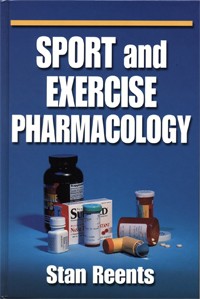 The best book for issues pertaining to drug actions during exercise is "Sport and Exercise Pharmacology," by Stan Reents, PharmD. To this day, it is still the only reference text ever published that examines the interface between drug pharmacology and exercise physiology. A good review of this topic in the medical literature is the paper by Stanley KL, et al. 1998 (see below). A review that coaches and athletic trainers may be interested in appeared in the October 2004 issue of Training and Conditioning (see References, below). Readers may also be interested in these reviews: EXPERT HEALTH and FITNESS COACHING Stan Reents, PharmD, is available to speak on this and many other exercise-related topics. (Here is a downloadable recording of one of his Health Talks.) He also provides a one-on-one Health Coaching Service. Contact him through the Contact Us page. REFERENCES Almond CSD, Shin AY, Fortescue EB, et al. Hyponatremia among runners in the Boston marathon. N Engl J Med 2005;352:1550-1556. Abstract Ayus JC, Varon J, Arieff AI. Hyponatremia, cerebral edema, and noncardiogenic pulmonary edema in marathon runners. Ann Intern Med 2000;132:711-714. Abstract Case JP, Baliunas AJ, Block JA. Lack of efficacy of acetaminophen in treating symptomatic knee osteoarthritis. Arch Intern Med 2003;163:169-178. Abstract De Meersman R. The effects of acetylsalicylic acid upon carbohydrate metabolism during exercise. Int J Clin Pharmacol Ther Toxicol 1988a;26:461-464. Abstract De Meersman RE. Thermal, ventilatory, and gluco-regulatory responses during exercise following short-term acetylsalicylic acid ingestion. Int J Clin Pharmacol Res 1988b;8:477-483. Abstract Gollapudi RR, Teirstein PS, Stevenson DD, et al. Aspirin sensitivity. JAMA 2004;292:3017-3023. Abstract Hutson MA. A double-blind study comparing ibuprofen 1800 mg or 2400 mg daily and placebo in sports injuries. J Int Med Res 1986;14:142-147. Abstract Jenkins C, Costello J, Hodge L. Systematic review of prevalence of aspirin induced asthma and its implications for clinical practice. BMJ 2004:328:434. Abstract Lisse JR, Macdonald K, Thurmond-Anderle ME, et al. A double-blind, placebo-controlled study of acetylsalicylic acid (ASA) in trained runners. J Sports Med Phys Fitness 1991;31:561-564. Abstract Matheson GO, Macintyre JG, Taunton JE, et al. Musculoskeletal injuries associated with physical activity in older adults. Med Sci Sports Exerc 1989;21:379-385. Abstract McLatchie GR, Allister C, MacEwen C, et al. Variable schedules of ibuprofen for ankle sprains. Br J Sports Med 1985;19:203-206. Abstract Moran M. Double-blind comparison of diclofenac potassium, ibuprofen and placebo in the treatment of ankle sprains. J Int Med Res 1991;19;121-130. Abstract Perazella MA, Eras J. Are selective COX-2 inhibitors nephrotoxic? Am J Kidney Dis 2000;35:937-940. Abstract Rauramaa RR, Salonen JT, Seppanen K, et al. Inhibition of platelet aggregability by moderate-intensity exercise: A randomized clinical trial in overweight men. Circulation 1986;74:939-944. Abstract Reents S. "Nonsteroidal anti-inflammatory drugs (NSAIDs) and salicylates". Chapter 11 in: Sport and Exercise Pharmacology, Human Kinetics, Champaign, IL, 2000. pp. 235-251. Reents S. "For the temporary relief of minor aches...". Training & Conditioning October 2004;14:19-24. (no abstract) Riendeau D, Charleson S, Cromlish W, et al. Comparison of the cyclooxygenase-1 inhibitory properties of nonsteroidal anti-inflammatory drugs (NSAIDs) and selective COX-2 inhibitors, using sensitive microsomal and platelet assays. Can J Physiol Pharmacol 1997;75:1088-1095. Abstract Roi GS, Garagiola U, Verza P, et al. Aspirin does not affect exercise performance. Int J Sports Med 1994;15:224-227. Abstract Santilli G, Tuccimei U, Cannistra FM. Comparative study with piroxicam and ibuprofen versus placebo in the supportive treatment of minor sports injuries. J Int Med Res 1980;8:265-269. Abstract Simpson RE, Phillis JW. Adenosine in exercise adaptation. Br J Sports Med 1992;26:54-58. Abstract Stanley KL, Weaver JE. Pharmacologic management of pain and inflammation in athletes. Clin Sports Med 1998;17:375-392. Abstract Stewart JG, Ahlquist DA, McGill DB, et al. Gastrointestinal blood loss and anemia in runners. Ann Intern Med 1984;100:843-845. Abstract Stovitz SD, et al. NSAIDs and musculoskeletal treatment. Phys Sports Med 2003;31:35-40, 52. (no abstract) Tokish JM, Powell ET, Schlegel TF, et al. Ketorolac use in the National Football League. Phys Sportsmed 2002;30:19-24. (no abstract) ABOUT THE AUTHOR 
Stan Reents, PharmD, is a former healthcare professional. He was a member of the American College of Lifestyle Medicine (ACLM) and a member of the American College of Sports Medicine (ACSM). In the past, he has been certified as a Health Fitness Specialist by ACSM, as a Certified Health Coach by ACE, as a Personal Trainer by ACE, and as a tennis coach by USTA. He is the author of Sport and Exercise Pharmacology (published by Human Kinetics) and has written for Runner's World magazine, Senior Softball USA, Training and Conditioning and other fitness publications.
Browse By Topic:
arthritis, banned substances, back pain, exercise and health, extreme exercise, sports medicine, sports pharmacology, stretching, ultra-endurance races
Copyright ©2026 AthleteInMe,
LLC. All rights reserved.
|