|
Exercise For Obesity
Author:
Stan Reents, PharmD
Original Posting:
05/06/2007 07:06 AM
Last Revision: 04/09/2020 10:38 AM
While scientific evidence shows that obesity does have a genetic component, lifestyle factors are probably more important. If so, then obesity should be preventable and reversible. A survey of over 21,000 people by Consumer Reports in 2008 seems to support this. They found that people who described themselves as "never fat" and people who described themselves as "formerly fat" had remarkably similar lifestyles: - regular consumption of fruits, vegetables, and whole grains
- avoidance of high-fat foods
- portion control (ie., eating modest quantities of food)
- regular exercise
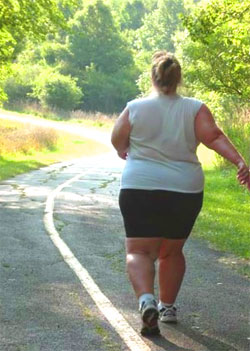 EXERCISE FOR OBESITY: DOES IT WORK? However, many in the scientific and medical community believe that exercise isn't very effective for weight-loss. Certainly, many obese people will tell you that it doesn't work for them. "But wait," you might be saying, "exercise burns calories, and this is how you lose weight, right?" So, does exercise work or not? The short answer to this question is: "it depends..." Of course exercise burns calories. And, it's also true that if more calories are burned than consumed, then body weight will decrease. Even when taken to the extreme, these relationships apply. Consider Tour de France cyclists: despite an intake of 6000-7000 calories per day, they still lose weight during the 21-day race. Can you imagine consuming 7000 calories per day and still losing weight?!! But, when explaining if exercise is effective for promoting weight loss, the story isn't quite that straight-forward. Here's why: EXERCISE IS ONLY MODERATELY EFFECTIVE FOR WEIGHT LOSS Unfortunately, exercise doesn't work for a lot of people trying to lose weight. For example, in a study of postmenopausal women, 12 months of exercise 5 days per week led to only a 1.3 kg weight loss (Irwin ML, et al. 2003). That's not very encouraging. There are 2 key reasons why exercise isn't as helpful for weight loss as you might think: 1) Often, a Single Exercise Session Just Doesn't Burn Enough Calories For many people, exercise represents a small percentage of the calories burned in any 24-hr period. One hour of brisk walking (an example of "moderate"-intensity exercise) only burns about 300-400 calories. Even a full hour of vigorous exercise constitutes only about 10-30% of the total calories most people burn up in a given 24-hr period. Contrast that to the Tour de France athlete who burns up as much as 9000 calories in a single day: to achieve that, he is riding a bike at a furious pace for 6 solid hours! Most people burn way more calories during "routine daily activities" (vacuuming, mowing the yard, washing the car, etc.) than they would during a typical exercise session:
| ACTIVITY | PERCENT OF
CALORIES BURNED
DURING AN
AVERAGE DAY | | • routine daily activities | 65 - 75% of the day's total | | • a single exercise session | up to 30 - 35% if vigorous
and prolonged | | • digestion | 5 - 10% |
The table above illustrates why sitting all day is a major cause of weight gain. 2) It's Too Easy to Consume Excess Calories It's simply too easy to consume excess calories. Think about it: you could probably consume 1500 calories in 5 minutes without much effort. But, how long would it take you to exercise those 1500 calories off? Brace yourself, because the answer to that question might be shocking: A person who weighs 180-lbs would have to walk for over 250 minutes. That's roughly 4 hours! A person who weighs less would have to walk even longer. So, it only takes 5 minutes to consume 1500 calories, but, 4 hours to burn off that amount. No doubt, that's pretty demoralizing! (The positive side of this concept is that, when you think of restaurant items in terms of "exercise equivalents," you'll make smarter choices. That's what our Exercise Calorie Converter is designed to do!) This lopsided nature of how easy it is to consume lots of calories compared to how difficult it is to exercise them off is one reason why, in 2015, researchers published an article in the British Journal of Sports Medicine titled "You Can't Outrun a Bad Diet." (Malhotra A, et al. 2015). Their point was that exercise cannot overcome poor dietary habits. 500 CALORIES PER DAY  Certainly, weight loss occurs if more calories are burned than consumed. But, as explained above, even if a person exercises for an hour, they may not lose weight. Why? Because it's a lot easier to consume more calories than you burn. A simple rule-of-thumb to remember is this: An excess of 500 calories per day, every day for 7 days, will lead to 1-lb of weight gain. That's how easy it is to gain weight. An excess of 500 calories is not going to make you "feel full." Only 43-oz. of soda pop adds up to 500 calories. Stop and think of how many calories are in an average dessert at a restaurant. Unless you increased your exercise or physical activity on a day that you consumed excess calories, then you may have exceeded that magical 500 calories per day rule. Fortunately, the reverse is also true: If you can create a calorie deficit of 500 calories every day for 7 days, you will lose 1-lb by the end of that week. OK, weight loss is not quite THAT simple, but this is still a useful rule to keep in mind when you dine out. (Remember the Consumer Reports survey above regarding food choices and portion sizes?...) EXERCISE CAN BE HELPFUL FOR WEIGHT LOSS So, it's correct that exercise isn't as effective for weight loss as it is for preventing and reversing lots of other lifestyle-induced health problems. Nevertheless, exercise can still be helpful for weight loss. Here are some positive results: • Distance Running: Obese runners lost an average of nearly 40 kg and dropped their body fat down to 14% as a result of running 95-km (about 60 miles) per week with no dietary changes (Tremblay A, et al. 1984). These are very impressive results, but very few people are willing to run 95-km per week. It turns out that exercise doesn't have to be punishing to produce effective weight loss: • Walking: Researchers at Duke University compared running with brisk walking. Overweight adults (average BMI of 29.7 kg/m2) who walked 30 minutes per day at 40-55% of maximum oxygen uptake avoided gaining additional weight. Patients were instructed not to diet during the 8-month study. Subjects in all 3 groups who exercised lost body weight and fat mass, with the group who ran 20 miles/week losing the most. However, when running 12 miles/week was compared with walking 12 miles/week, both groups lost weight and fat mass. Subjects who did not exercise gained about 2.5 lbs. Thus, it appears that brisk walking can be as effective as running (Slenz CA, et al. 2004). WHY OBESE AND OVERWEIGHT PEOPLE SHOULD EXERCISE REGULARLY Obesity is a risk factor for a lengthy list of other diseases, including hypertension, type-2 diabetes, metabolic syndrome, heart disease, joint problems, and more. These diseases, in turn, promote the development of still more medical problems: hypertension increases the risk of kidney disease and stroke; diabetes leads to problems with vision and peripheral circulation, and on and on. Even if weight loss is minimal, overweight and obese people should still exercise regularly (after first getting clearance from their physician). Many more health benefits are obtained with regular exercise compared to dieting: • Aerobic exercise is beneficial for the cardiovascular system. In addition to strengthening the heart, exercise will stimulate the circulation, increase oxygen uptake by skeletal muscle, lower blood pressure at rest, and reverse the process of atherosclerosis. Aerobic exercise can effectively lower blood pressure in obese subjects with hypertension even if no weight is lost (Whelton SP, et al. 2002). • Resistance exercise strengthens the bones and maintains muscular strength. It doesn't take much resistance to have a positive effect on bone density: In a study of squash and tennis players, simply swinging a light-weight racquet produced a noticeable increase in the density of the bones of the dominant arm (Kannus P, et al. 1995). Muscle strength is improved by any form of resistance-training (eg., weight-lifting, push-ups, sit-ups, squats, working-out with rubber bands, etc.), but even walking will increase muscle strength in the muscles of the legs and back. FAT BUT FIT? Which is worse for your health: being overweight, or, having poor aerobic fitness? Because exercise (mostly we are talking about aerobic exercise here...) provides so many health benefits, the concept of "fat but fit" has evolved, beginning around 1995 (Barlow CE, et al. 1995). Logically, research studies were then conducted in an attempt to determine if it's better to lose weight, or, improve your aerobic fitness... Mikael Fogelholm, PhD, a nutrition professor at the University of Helsinki, reviewed 36 of these research studies and came to the following conclusions (Fogelholm, M. 2010): • To reduce your risk of dying from cardiovascular causes, maintain your aerobic fitness: Individuals who had good aerobic fitness, even though their body-mass index (BMI) was elevated, had lower risk compared to people with a normal BMI value and poor aerobic fitness. So, to reduce your risk of dying from cardiovascular causes, "fat but fit" is valid. • To reduce your risk of developing type-2 diabetes, lose that excess weight: Here, the opposite pattern was seen: To reduce your risk of developing type-2 diabetes, it's more important to get your BMI down into a normal range than to improve your aerobic fitness. The research showed that, even when aerobic fitness was good, there was still an elevated risk for type-2 diabetes if BMI was above normal. There was one other conclusion: Performing aerobic exercise at a level of intensity that actually improves your aerobic fitness (ie., VO2max) was more important to offset these health risks than simply doing aerobic exercise that didn't improve aerobic fitness. In other words, taking your dog for a brief walk outdoors might qualify as aerobic exercise (if you get your heart rate up!), but it may not be enough to improve your aerobic fitness. So, for people who can't perform vigorous aerobic exercise, losing excess weight becomes even more critical. EXERCISE RECOMMENDATIONS FOR WEIGHT LOSS FROM THE AMERICAN COLLEGE OF SPORTS MEDICINE The standard recommendation for people who are overweight (BMI > 25) or obese (BMI > 30) is, of course, "diet and exercise." But, what exactly does that mean? Let's focus on exercise: In 1995, the American College of Sports Medicine (ACSM) made the general recommendation that otherwise healthy adults should exercise at least 150 minutes per week (Pate RR, et al. 1995). That translates to 30 minutes per day on 5 days each week. Subsequently, research suggested that 150 minutes per week is not enough for weight loss. John Jakicic, PhD, and colleagues concluded that 200 minutes per week (or more) will not only achieve a greater weight loss, but, more importantly, will do a better job of keeping that weight off (Jakicic J, et al. 1999). As a result, in 2001, ACSM increased the recommendation to 200-300 minutes per week in their official "Position Stand" on exercise and weight loss (Jakicic JM, et al. 2001). ACSM issued a revision in February 2009 (Donnelly JE, et al. 2009). The following amounts of moderate-intensity physical activity were recommended: - To Prevent Weight Gain: 150-250 minutes per week
- To Promote Weight Loss: at least 250 minutes per week
Here's an example of how more exercise can produce better results: • Aerobic Exercise: A study of post-menopausal women with a BMI > 25 who engaged in aerobic exercise (mostly walking and biking), showed that the amount of body fat lost was proportional to the amount of weekly exercise (Irwin ML, et al. 2003):
AMOUNT OF
WEEKLY EXERCISE | PERCENT
BODY FAT
LOST | | > 195 minutes / week | 4.2% | | 136 - 195 minutes / week | 2.4% | | < 136 minutes / week | 0.6% |
Exercising 40 minutes per day, on 5 days out of 7, would add up to 195 minutes per week. EXERCISE RECOMMENDATIONS FOR OLDER OBESE SUBJECTS Obesity is increasing among the senior population just as it is for other age groups. This results in significant health and lifestyle concerns. Weight should be a greater concern for older populations because of the higher occurrence of secondary conditions such arthritis, heart disease, and hypertension. In addition, as a person grows older and experiences a decline in strength, balance, and cardiovascular endurance, any excess weight makes performing activities of daily living more difficult. For these reasons, weight reduction should always be a goal for any older individual who has been classified as overweight or obese. The American Council on Exercise (ACE) recommends the following for older overweight subjects: 1) Aim to exercise 3 days per week initially. Gradually work up to 5 days per week, varying the program on alternating days to prevent boredom. 2) As obesity gets worse, exercise becomes increasingly difficult. Start with 30 minutes of exercise broken down into 10 minutes of cardiovascular activity (eg., walking on a treadmill, stationary cycling), 10 minutes of weight-lifting using 5-10-pound dumbbells, and 10 minutes of flexibility exercises. Increase the duration of each phase of exercise as you become more capable and comfortable with the program. Rest as necessary to prevent premature fatigue. 3) Intense effort is not the goal for elderly people. If you cannot carry on a conversation while walking on the treadmill or riding the exercise bike, you are exercising too hard. 4) If your leg muscles are weak, try non-weight-bearing activities, such as aquatic exercise, and arm and leg cycling. 5) Don't be too concerned about your weight during the early stages of the program. The primary goal is regular exercise. People over age 65 rarely follow diet and exercise programs for weight loss. Hiring a properly trained and certified personal trainer, at least during the first few exercise sessions, is highly recommended. "STEPS" YOU SHOULD TAKE "Exercise" and "daily physical activity" are separate but complementary behaviors. Both are important for maintaining your weight...and, preventing health problems: Exercise Exercise can be an effective component of a weight-loss program, however, most people simply don't exercise enough to make it work for them. Here are some suggestions for integrating moderate exercise into your lifestyle: • If possible, exercise 200 minutes per week. Even if no weight is lost, you will be obtaining health benefits (lower blood pressure, for example). Also, it's possible that you are losing fat but this trend is disguised because you are simultaneously adding muscle. • Exercise does not have to be intense to burn calories. Walking has been shown to be effective. However, slow bicycling, because most of your body weight is supported, is probably not very effective. • Walk or bike to the store whenever possible. • Convert the daily task of walking the dog into your daily run and take the dog with you. • Buy a pedometer and wear it daily.  • Buy some simple exercise aids (jump rope, exercise bands, exercise watch, running shoes, etc.) and carry them with you when you travel. A really useful all-in-one exercise kit you can take with you when you travel is the FitKit. • Surround yourself with other people who exercise regularly; develop social circles based on exercise (walking in the mornings, bike trips on weekends, tennis leagues, etc.) • Stick with your lifestyle change long enough until it becomes a habit. Daily Physical Activity As mentioned above, you probably burn way more calories from your routine daily activities (eg., doing laundry, washing the car, vacuuming) than you burn during a single exercise session. Like saving loose change, small amounts of activity throughout the day add up. Here are some suggestions for integrating more movement into your lifestyle: • Park at the far end of the parking lot. • When you can, take the stairs, not the elevator or escalator. • Carry your bags of groceries to your car instead of using the cart. • Mow your lawn with a push-mower. • If you have a sedentary job, stand up and move around hourly. Don't sit all day! Buy an activity tracker and wear it daily. Remember, it only takes a calorie-deficit of 500 calories per day every day for 7 days to produce a 1-pound-per-week weight loss. Use our Exercise Calorie Converter mobile app to make smarter choices when you dine out! But, don't try to lose more than 2 pounds per week. Rapid weight loss is unhealthy. So, if you do the math, it will take you a year to lose 100 lbs. Keep track of your progress by using the BMI Tables. SUMMARY Exercise should be a part of every weight-loss plan. Exercise not only helps you burn calories and lose weight, but it also provides a wide variety of other health benefits, such as lower blood pressure, increased bone density, and a stronger heart, just to name a couple. Also, exercise, if done regularly, helps to keep the weight off after it is lost. 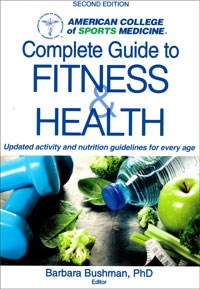 FOR MORE INFORMATION A useful exercise book for consumers is ACSM's Complete Guide to Fitness and Health. Readers may also be interested in these reviews: EXPERT HEALTH and FITNESS COACHING Stan Reents, PharmD, is available to speak on this and many other exercise-related topics. (Here is a downloadable recording of one of his Health Talks.) He also provides a one-on-one Health Coaching Service. Contact him through the Contact Us page. REFERENCES Barlow CE, Kohl HW, Gibbons LW, et al. Physical fitness, mortality and obesity. Int J Obes Relat Metab Disord 1995;19 Suppl 4:S41-S44. (no abstract) Donnelly JE, Blair SN, Jakicic JM, et al. Appropriate physical activity intervention strategies for weight loss and prevention of weight regain for adults (ACSM OFFICIAL POSITION STAND). Med Sci Sports Exerc 2009;41:459-471. Abstract Fogelholm M. Physical activity, fitness and fatness: relations to mortality, morbidity and disease risk factors. A systematic review. Obesity Reviews 2010;11:202-221. Abstract Irwin ML, Yasui Y, Ulrich CM, et al. Effect of exercise on total and intra-abdominal body fat in postmenopausal women. JAMA 2003;289:323-330. Abstract Jakicic JM, Winters C, Lang W, et al. Effects of intermittent exercise and use of home exercise equipment on adherence, weight loss, and fitness in overweight women. JAMA 1999;282:1554-1560. Abstract Jakicic JM, Clark K, Coleman E, et al. Appropriate intervention strategies for weight loss and prevention of weight regain for adults (ACSM OFFICIAL POSITION STAND). Med Sci Sports Exerc 2001;33:2145-2156. Abstract Kannus P, Haapasalo H, Sankelo M, et al. Effect of starting age of physical activity on bone mass in the dominant arm of tennis and squash players. Ann Intern Med 1995;123:27-31. Abstract Malhotra A, Noakes T, Phinney S. It is time to bust the myth of physical inactivity and obesity: you cannot outrun a bad diet. Br J Sports Med 2015;49:967-968. Abstract Pate RR, Pratt M, Blair SN, et al. Physical activity and public health. A recommendation from the Centers for Disease Control and Prevention and the American College of Sports Medicine JAMA 1995;273:402-407. Abstract Slentz CA, Duscha BD, Johnson JL, et al. Effects of the amount of exercise on body weight, body composition, and measures of central obesity. Arch Intern Med 2004;164:31-39. Abstract Slentz CA, Bateman LA, Willis LH, et al. Effects of aerobic vs. resistance training on visceral and liver fat stores, liver enzymes, and insulin resistance by HOMA in overweight adults from STRRIDE AT/RT. Am J Physiol Endocrinol Metab 2011;301:E1033-E1039. Abstract Tremblay A, Despres JP, Bouchard C. Adipose tissue characteristics of ex-obese long-distance runners. Int J Obes 1984;8:641-648. Abstract Van Etten LMLA, Westerterp KR, Verstappen FTJ, et al. Effect of an 18-wk weight-training program on energy expenditure and physical activity. J Appl Physiol 1997;82:298-304. Abstract Whelton SP, Chin A, Xin X, et al. Effect of aerobic exercise on blood pressure: a meta-analysis of randomized, controlled trials. Ann Intern Med 2002;136:493-503. Abstract ABOUT THE AUTHOR 
Stan Reents, PharmD, is a former healthcare professional. He is a member of the American College of Lifestyle Medicine (ACLM) and a member of the American College of Sports Medicine (ACSM). In the past, he has been certified as a Health Fitness Specialist by ACSM, as a Certified Health Coach by ACE, as a Personal Trainer by ACE, and as a tennis coach by USTA. He is the author of Sport and Exercise Pharmacology (published by Human Kinetics) and has written for Runner's World magazine, Senior Softball USA, Training and Conditioning and other fitness publications.
Browse By Topic:
aerobic exercise, exercise and health, exercise guidelines, exercise recommendations, health and fitness targets, obesity
Copyright ©2026 AthleteInMe,
LLC. All rights reserved.
|